This is becoming my personal website. I may post on machine learning and other things. Everything is work in progress.
-
My whole academic experience was focused on tabular data in one way or another, whereas I have spent most of my career in industry working with computer vision foundation models. The recent implementations of tabular foundation models (TFMs) therefore sparked quite some curiosity and a little astonishment on my end.... [Read More]
-
Ruff linter and formatter
This is a quick post on Ruff, a modern, fast linter and formatter for Python. I’ve only recently integrated Ruff into my personal workflow and wanted to collect a few notes about basic usage here. [Read More] -
GeoPandas
I’ve recently started exploring GeoPandas, a great Python library for working with geospatial data. It combines the convenience of pandas for handling tabular data with the capabilities of shapely to perform geometric operations. [Read More] -
Boltzmann + the machine
After the previous post on energy-based models (EBMs) and the Boltzmann distribution, we will now explore a classical family of such generative models. They are known as Boltzmann machines and have played an important role in the development of neural networks. Notably, the 2024 Nobel Prize in Physics was awarded... [Read More] -
Boltzmann & ML
There are intriguing connections between machine learning and physics. A full appreciation of those formal relationships and analogies is probably beyond my little (remaining) understanding of physics, and certainly very much beyond the scope of this post. We focus on the Boltzmann distribution in statistical physics, the softmax function and... [Read More] -
How to post notebooks?
It turns out that blog-posting Jupyter notebooks with Jekyll (and the Beautiful Jekyll theme) is enjoyably simple. One just needs to follow the instructions below. [Read More] -
Denoising diffusion models
A brief introduction to generative diffusion modeling is provided in this blog post. In particular, the discussion focuses on the denoising diffusion probabilistic model (DDPM) [Sohl-Dickstein et al., 2015; Ho et al., 2020]. The relation to other generative modeling approaches such as energy-based models (EBMs), variational autoencoders (VAEs) or normalizing... [Read More] -
Variational autoencoder
This blog post contains a tutorial on the variational autoencoder (VAE). Since its introduction by [Kingma and Welling, 2014, Rezende et al., 2014], the framework has received much attention for its generative modeling and representation learning capabilities. Recent reviews are given in [Doersch, 2016, Kingma and Welling, 2019, Wei et... [Read More] -
GP models
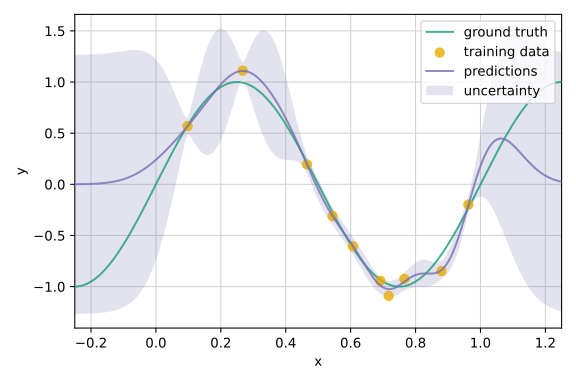
An introduction to Gaussian process modeling is given in this short note. Gaussian processes for example enable regression with built-in uncertainty quantification. [Read More] -
Physics-informed neural nets
The idea of using neural networks (NNs) for solving partial differential equations (PDEs) has been around for some time [Dissanayake and Phan-Thien, 1994; Lagaris et al., 1998]. Following the advances in fields like computer vision and natural language processing, NNs have recently enjoyed growing interest in computational science and engineering,... [Read More] -
Attention mechanism
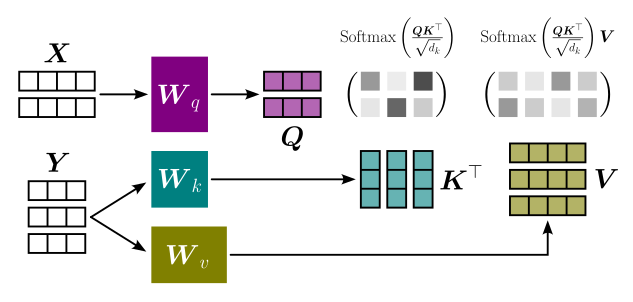
This blog post gives a brief introduction to attention in deep neural nets. Attention establishes a mechanism that allows a model to make predictions based on selectively attending to different items of an input sequence. It can be employed as a pretty generic modeling layer for problems with a sequential... [Read More] -
Contrastive learning
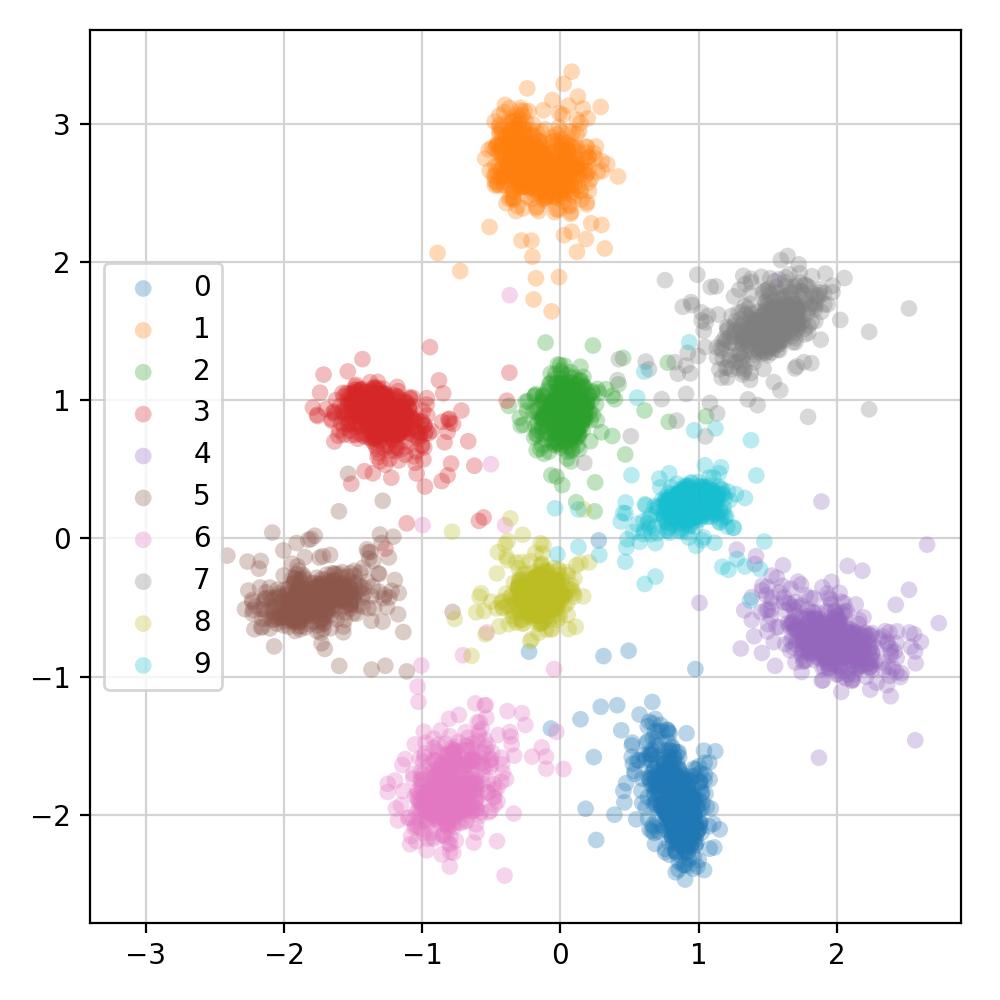
This blog post provides an overly brief introduction to contrastive representation learning. In particular, we restrict the discussion to the contrastive loss [Hadsell et al., 2006] and the triplet loss [Schroff et al., 2015]. A more comprehensive review can be found in [Le-Khac et al., 2020]. A common field of... [Read More] -
Adversarial ML
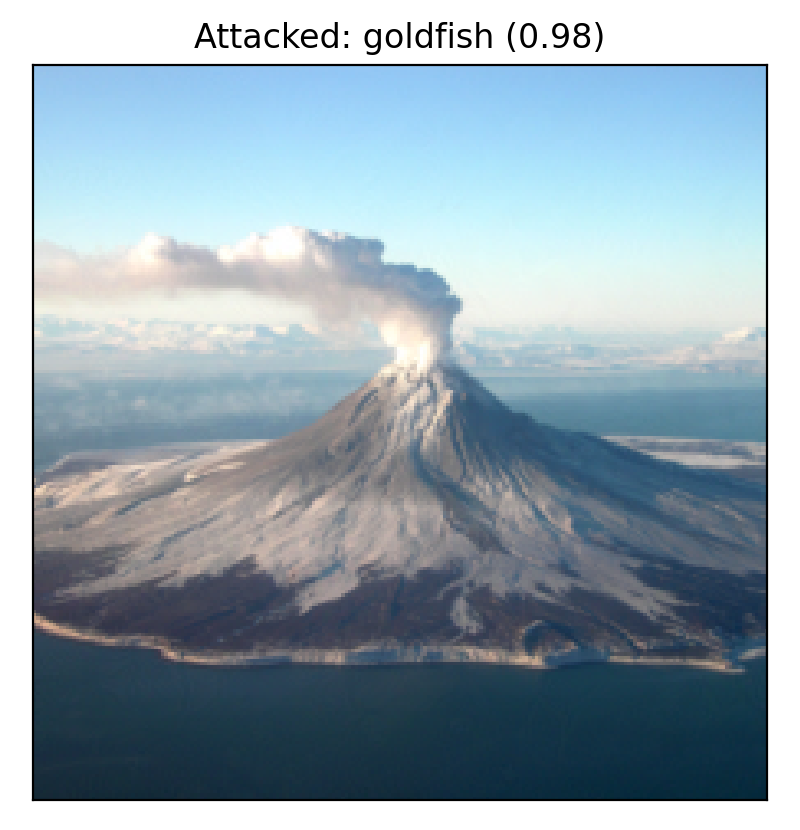
The existence of adversarial examples for neural networks has been first observed in the context of image classification [Szegedy et al., 2014]. There are many great review papers on adversarial attacks and corresponding defenses. For example, the following publications are open access: [Ren et al., 2020; Khamaiseh et al., 2022;... [Read More] -
Welcome!
This is my attempt at starting a blog. It will be mainly concerned with machine learning, neural networks, computer vision and generative AI. Further topics could include music, biking or parenting. Watch out, you may encounter irony!